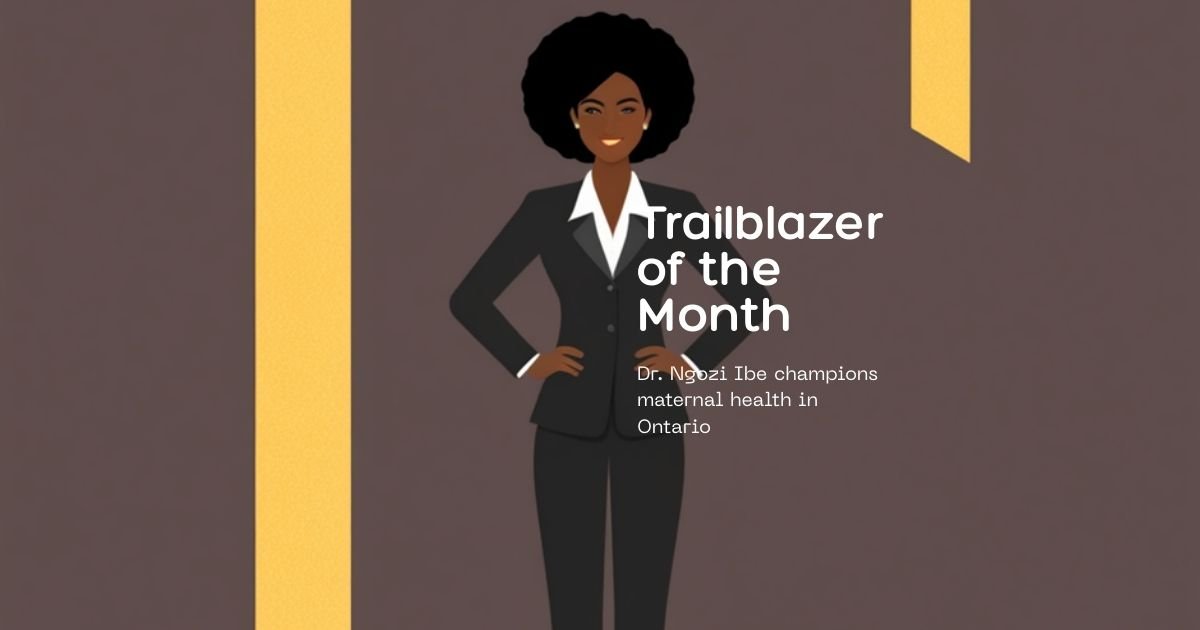
When Dr. Ngozi Ibe arrived in Ontario in 2018, she carried two things customs could not weigh: a medical degree from the University of Lagos and a quiet fury about maternal mortality rates. What she did not know was that Canada had its own gaps — especially for African and Black mothers navigating a healthcare system that was not built with them in mind.
Today, Dr. Ibe leads a maternal health initiative out of Hamilton that has become a model for culturally competent care across Ontario.
“The system works. But it does not work the same for everyone. My job is to close that gap.”
From Lagos to Hamilton
Dr. Ibe’s path was the one most immigrant doctors know: long, expensive, and humbling. After passing the Medical Council of Canada Qualifying Examination Part 1 (MCCQE1) and the National Assessment Collaboration Objective Structured Clinical Examination (NAC OSCE), she secured a residency. During community rotations, she noticed something troubling.
“I kept meeting African women who were pregnant and had no idea how the Canadian system worked. One woman had not seen a doctor in seven months because she did not know how to book an appointment without a family doctor.”
Building Something New
She developed a peer support model pairing newly arrived pregnant women with trained community health navigators from the same cultural backgrounds. The programme now serves over 200 women annually in English, French, Yoruba, Igbo, and Twi.
“Healthcare is not just about what happens in the clinic. It is about whether a woman feels safe enough to show up.”
Know someone who should be featured? Email stories@gathermedia.ca.