

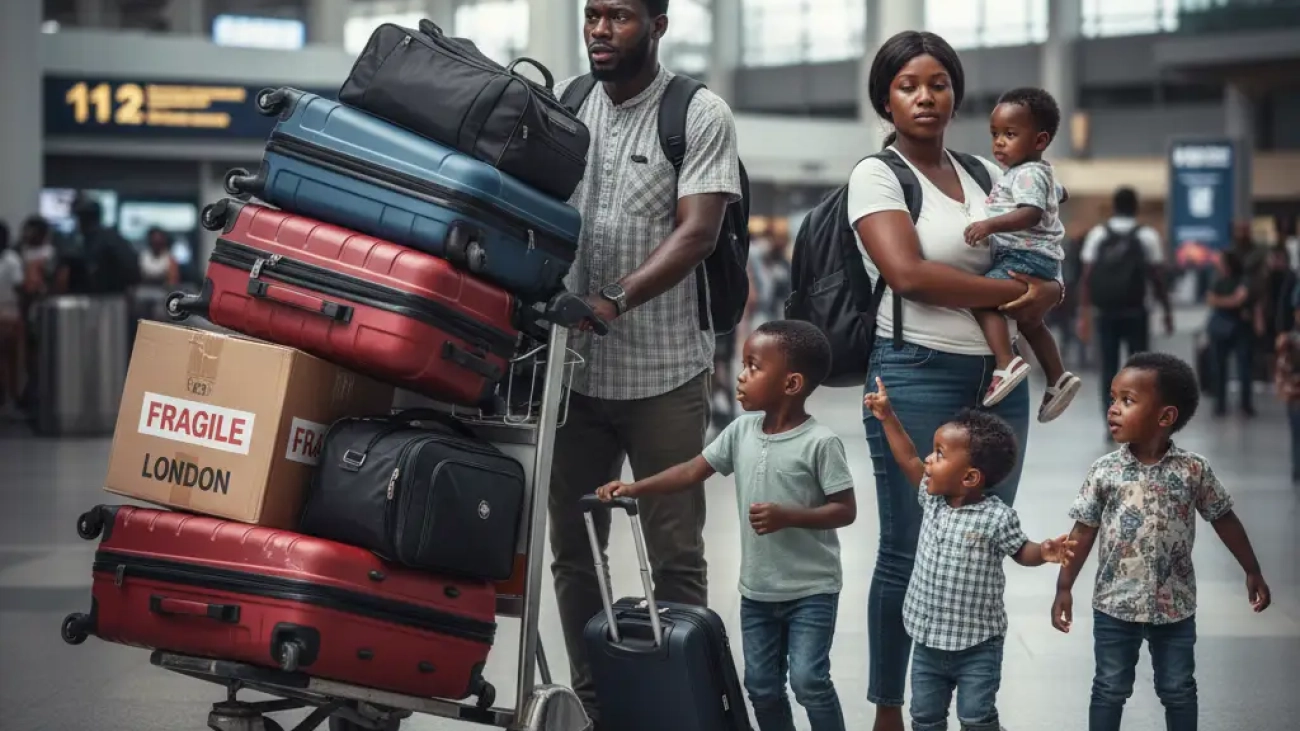
Let’s say the unpopular thing out loud:
Going back to Nigeria after japa is not a failure.
In many cases, it’s a graduate-level course in courage.
Lately, my timeline has been full of “japada” gist—videos of Nigerians packing up from the UK, airport selfies but in reverse, hot takes from people who have never crossed Seme border yet. There’s the usual chorus:
“You see them? They couldn’t cope.”
“After all the noise, they’re back to square one.”
I understand the temptation. Poverty plus Wi-Fi can turn anybody into a part-time comedian. But every time I see those jokes, something in my chest tightens.
Because I know some of these people.
I’ve watched their stories close-up.
And I’m not ready to laugh.
The Promise vs. The Program
When many of us were planning to japa to the UK, we were sold a simple equation:
Hard work + one small masters + NHS number = soft life.
Then reality logged in.
Visas that looked straightforward suddenly came with plot twists.
Work routes were tightened, salary thresholds climbed, PSW and dependent rules started shape-shifting like they had spiritual problems.
Cost of living galloped.
Rent behaved like it was trying to win Olympics.
Council tax, TV licence, heating bills—expenses we didn’t even grow up naming—joined the party.
Don’t get me wrong: opportunities exist. People are thriving.
But for a good number of folks, the maths stopped mathing. After years of night shifts, discrimination, weather-induced depression and immigration goalposts moving mid-game, going back home started looking less like shame and more like sanity.
My Friends Who “Japada” – The Good, The Bad, The Complicated
Let me introduce a few people—names changed, gist very real.
1. Tayo – From Care Home to Creative Hub
Tayo was doing care work in the UK. Proper grinding.
Night shifts, double shifts, back pain that needed its own prayer point.
He loved his clients, but the system was chewing him up.
Visa anxiety + burnout + feeling invisible in a place where your accent enters the room before you do.
One December, he came home for holiday and saw Lagos with new eyes. Not just the chaos, but the hustle. Friends were running content studios, fashion brands, food businesses. A cousin invited him to a small creator meet-up in Lekki. He went “just to see” and left with three potential clients for social media management.
Within a year, Tayo relocated back.
Today, he runs a small creative agency in Lagos servicing Nigerian brands and two UK clients remotely. His light still goes off, traffic still insults him daily, but the dignity in his voice when he talks about his work? Different.
Did he “waste” the years in the UK?
No. That experience gave him systems thinking, exposure, contacts and a fresh sense of what he’s worth.
2. Busola – Japada and Still Confused
Busola’s story is not as shiny.
She left a UK healthcare job after her husband’s visa issues turned their family life into a rollercoaster. Constant stress, long working hours, kids essentially raised by childminders. When a job opened up back in Nigeria with decent pay, she took it and moved the whole family back.
Now she battles reverse culture shock.
The heat feels violent.
The school run is a war.
She misses orderly queues, silent buses, online services that actually work.
Her kids are adjusting better than she is. Some days she’s grateful. Other days she lies awake wondering if they jumped too quickly.
Is she a failure? No. She’s a human being stuck between two imperfect options, trying to choose the one that breaks her family the least.
3. Dapo – The One Everyone Laughs At
Dapo went to the UK for a masters with borrowed money. Visa wahala followed him like village people. His dependent couldn’t work as planned, job hunt was brutal. After some painful years and a stack of debt, he returned to Nigeria.
The mocking committee went to work:
“So you went to wash plates and came back empty-handed?”
“Oyinbo land no favour you, eya.”
What they don’t mention is that back home, he’s slowly building a logistics business. It’s not Instagram-glam. Bikes break down. Customers ghost. Nigeria tries its best to frustrate him.
But he wakes up each morning doing his own thing on his own soil, and that counts for something.
Nigeria Is Still… Nigeria
Before anyone accuses me of romanticising, let’s be honest:
Nigeria right now is not beans.
The naira is misbehaving like it didn’t grow up in a good home.
Inflation is chewing through salaries.
Electricity is a suggestion, not a guarantee.
Security issues, poor healthcare, broken institutions—nobody needs a lecture on this.
Plenty of the people returning know these things.
They are not naive. Most of them experience the shock twice—first when they left, then when they came back and realised how much worse some things have become.
So when someone decides, with clear eyes, to re-enter that wahala because they believe they can build something meaningful there?
I don’t see failure.
I see a different breed of courage.
To Those Mocking the Returnees
Let’s talk to ourselves for a second.
If you’re in Nigeria laughing at japada folks, ask yourself:
What exactly are you mocking?
- The fact that they tried, saw it wasn’t working for them, and had the guts to change course?
- The fact that they’re willing to start again, twice, while many of us are too scared to start once?
- The fact that they now speak from experience instead of vibes and YouTube videos?
It’s easy to type “welcome back to reality” from a place you also complain about 24/7.
The real shame is not that some people returned.
The real shame is that a country with this much potential made leaving look like the only logical option for so long.
We need to stop using people’s passports as measuring tape for their value.
Why I Understand Japada – But I’m Not Taking That Path (Yet)
Let me confess: there are days I’m tempted.
Days when the homesickness hits so hard I start pricing tickets on random travel sites.
Days when the weather, the racism, the visa stress, the isolation—everything—conspires to whisper, “Just go home.”
And honestly? I understand why some people do.
But for me, I’m not ready. Not yet.
Because I haven’t achieved what pushed me out in the first place:
- I don’t yet have the level of financial cushion I promised myself—savings that can survive Nigeria’s mood swings.
- I haven’t unlocked the career leverage I came here for: skills, networks, maybe a stronger passport that opens global doors.
- I still have responsibilities—family members counting on remittances, debts that need finishing, goals that are half-built.
If I went back today, it would be from a place of frustration, not strategy.
And I’ve seen what happens when people relocate (in any direction) from pure frustration—it’s sweet for three months and bitter afterwards.
So I stay.
Not because the diaspora is perfect.
Not because I think I’m “better” than those who returned.
But because the assignment I gave myself when I left home is not yet complete.
The Returnees Might Be the Builders We Need
Here’s my real unpopular opinion:
The people who have left and returned—japa + japada—might be exactly the kind of stubborn, globally exposed, battle-tested human beings Nigeria needs.
They have:
- Seen functional systems and know they’re not fairy tales.
- Worked in environments where punctuality, accountability and process actually matter.
- Learned to navigate immigration, racism, exploitation and still stand.
If those people decide to pour that experience into businesses, schools, hospitals, creative studios, farming projects, political movements—we all benefit, whether we stayed, left, or are still planning our own escape.
So instead of mocking them at the airport, maybe:
- Ask what they’ve learned.
- Ask what they’re building.
- Ask how we can collaborate, even across borders.
Final Reminder (Mostly to Myself)
There’s no one correct immigration storyline.
Some will japa and stay.
Some will japa, japada, and never look back.
Some will move back and forth like human pendulums because their lives sit in two countries at once.
As for me?
I honour the ones who had the guts to turn their relocation story upside down. I’m cheering for the businesses they’re starting, the families they’re stabilising, the communities they’re rebuilding.
But I’m also honest enough to say: I’m not there yet.
Until I’ve hit the goals that drove me out—the skills, the stability, the options I came to collect—going back would feel like closing a book halfway and pretending it’s the end of the story.
One day, maybe, I’ll be ready to write my own japada chapter.
For now, I’m still neck-deep in the messy middle of the journey, trying to make sure that if I ever go back, it will be from a place of completion—not defeat.
And that, in its own way, is also an unpopular kind of courage.
Add a Comment